
Teaching physics hinges on clear data and precise sketches. Free graph paper freeware options let students plot experiments, chart equations, and visualize motion without clutter. In this guide I share classroom-friendly planning tips, grid choices, printing basics, and ways to involve students in data literacy.
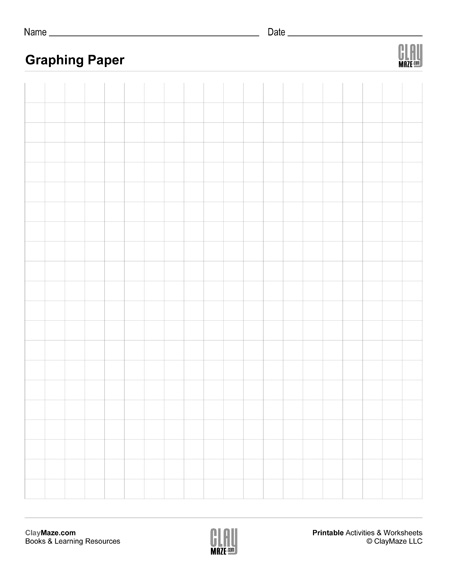
A first decision is the grid type that best suits the lesson. For data plotting and slope reading, a square grid with evenly spaced lines helps students gauge rate and accuracy. Coordinate grids are ideal when mapping vectors or plotting parametric graphs. When time is limited, a printable grid that includes margins and axis labels serves as a reliable stand-in for a chalkboard sketch.
Paper size and orientation matter for handouts and labs. US Letter or A4 work well, and landscape can fit velocity time graphs without crowding data points. Make sure the grid scale matches your units and that margins leave space for axis labels. If students annotate, a light border helps keep sketches neat.
Choosing the right grid
In a projectile-motion lab, I assign teams to plot height versus time using a square grid. We start by calibrating the grid spacing so that 1 cm on paper equals 0.1 m in data, then students mark points and draw trend lines with a ruler. The coordinate grid helps them visualize velocity and acceleration as slopes and curvatures.
Printing scale
When printing, set the scale to 100% or Actual Size and verify that no page is scaled by the browser. Check margins and ensure the grid is evenly printed across sheets if you use multiple pages. For color vs black-and-white, grayscale printing keeps line clarity; color highlights axes if your printer supports it.
FAQ Q1 What grid size is best for beginners A1 Start with 0.5 cm squares to balance legibility and data density. FAQ Q2 Should I print in portrait or landscape A2 Landscape often fits longer graphs and velocity time plots; align with your lab's data layout. FAQ Q3 How can I ensure accuracy when printing A3 Use actual size, verify margins, and compare printed dimensions with a ruler before a class.
FAQ Q4 Is color helpful or unnecessary A4 Color is optional; it helps highlight axes or functions, but grayscale works for most graphs.
In practice, choosing grid paper for physics labs is about balancing clarity, accuracy, and ease of use. Start with a grid that matches your measurement units, pick a suitable paper size, and test print settings before a class. Use margins to leave room for notes and ensure students can graph quickly without crowding. With standard printable grids, your data plots become legible and consistent across groups.