
This week I carved out a small wind-down ritual after school for the kids, a routine that helps us reset before homework. I use calm down corner printables as a gentle nudge to slow down, pick a calm activity, and breathe together.
After school, we sit at the low table and name what we feel, from tired to frustrated to silly. The printable prompts give us language for feelings, a quick breathing exercise, a short grounding ritual, or a choice of a quiet activity. It isn’t magical, but it offers predictable steps that reduce the back-and-forth, and it gives us a shared starting point when plans derail. The routine becomes something my kids can count on, even when the day was chaotic, and that consistency matters.
I mapped a simple setup: a basket of quiet tools, a printable card rack, a timer, and a comfy corner by the window. We rotate the activities weekly so nothing feels stale, and we keep a couple of quiet games handy for variety. The plan isn’t a rigid schedule, but a reliable rhythm we can fall back on when screens pull attention elsewhere, or when a mood shifts mid-dinner. That flexibility keeps us from feeling boxed in.
Setup and Flow
I keep a weekly checklist for the corner, marking which days we used it and what the kids liked best, from the quiet card to the breathing card. The printable sheets stay in a small binder, easy to reach on days when energy runs high, and I add a tiny note about any mood or boundary that felt off. I also jot tweaks I want to try next week, which keeps planning actionable rather than algebraic. I also keep a tiny mood checklist.
Tradeoffs
One limitation is space. A small nap corner works best for us, but in a busy house we sometimes need to borrow the sofa or a chair. We’ve learned to keep only a handful of cards visible at a time and store the rest in a labeled box on a shelf. That keeps clutter down, makes the table feel calm, and helps the kids focus on one choice at a time, and sometimes we switch seats to change the energy.
Another adjustment is timing. If after dinner is frantic, we opt for a shorter version, or postpone until calmer, and we let the kids choose which card to start with to feel in control. The cards are flexible; we can swap activities or skip a prompt if someone isn’t ready. The key is to treat the moment as a pause, not punishment, so the habit sticks and feels like care. We also test new cards on Sundays to refresh the routine.
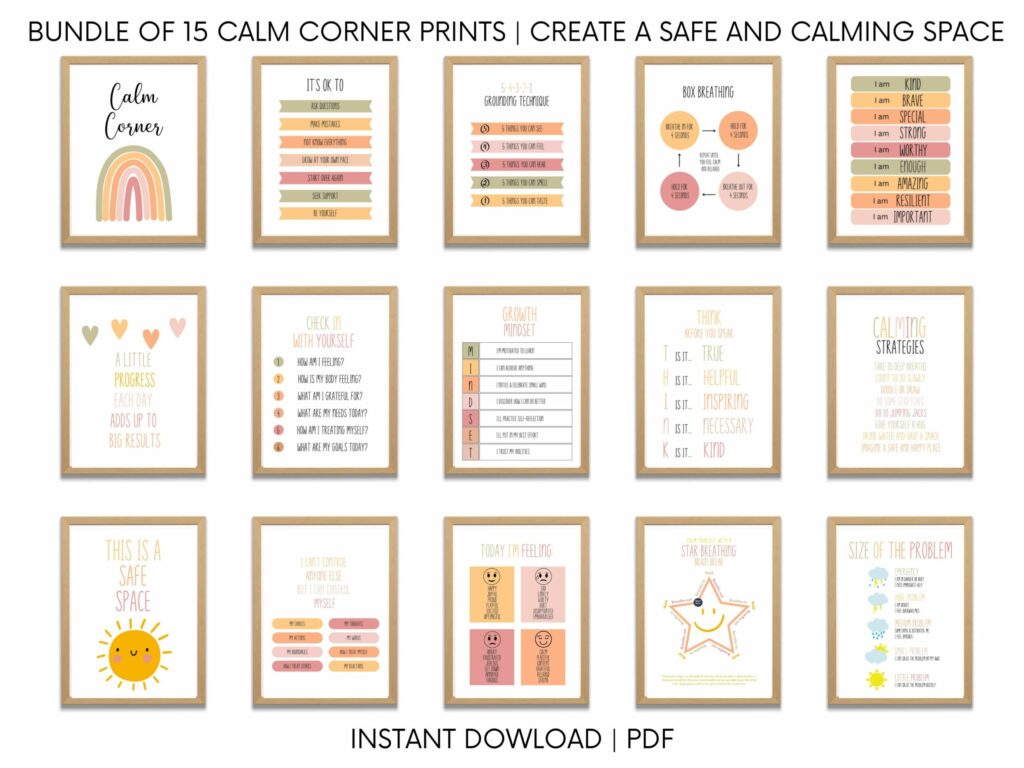
I’ve noticed small wins worth noting: smoother transitions, fewer earlier meltdowns, and better listening when siblings are sharing the same space. The routine isn’t a cure-all, but it creates expected cues that kids can read, and that matters more than the fancy design on a page. It’s also easier for me to stay consistent. Over time, I’ve seen the script become almost second nature, a cue we all recognize, and when someone’s ready, we move through the steps together, without nagging.
Looking ahead, I’ll keep refining the setup, pruning anything that feels optional and keeping the core routine visible in our weekly plan. The payoff isn’t a guaranteed calm every day, but a shared rhythm that respects everyone’s pace, and a sense that we’re moving through evenings together with a little more patience. The practice matters because it honors boundary lines, and with calm down corner printables quietly doing their part, we can finish the day with intention.