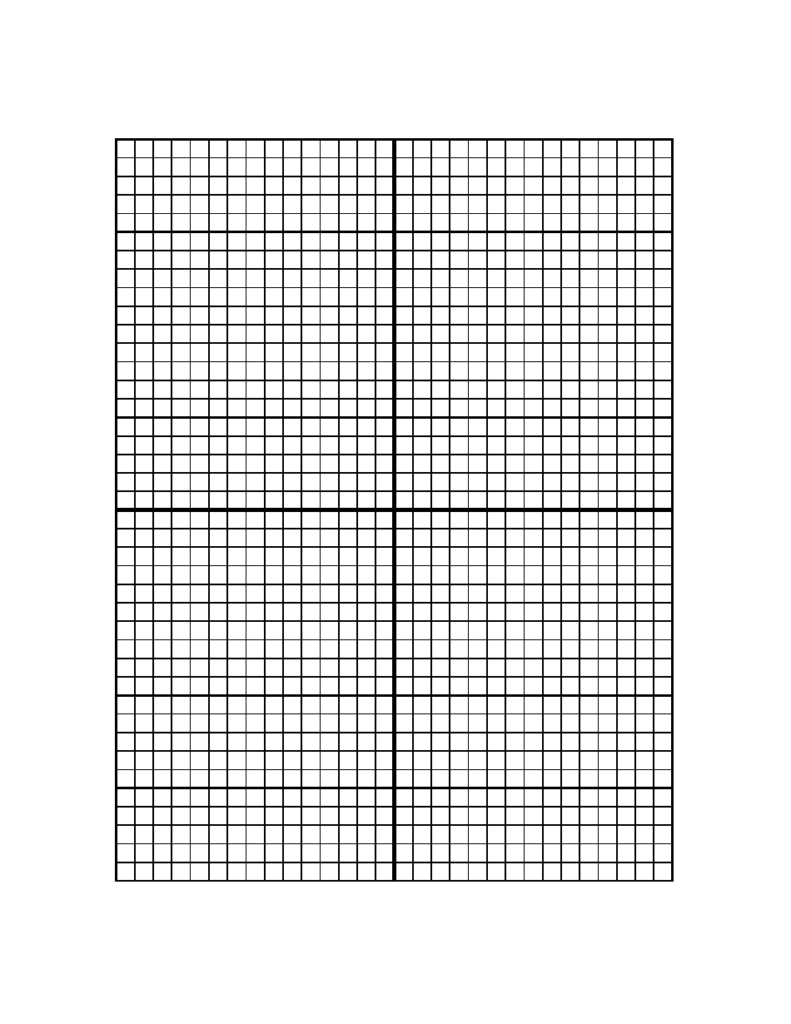
As a physics teacher, I rely on clean grids to help students visualize motion, map trajectories, and compare measurements; a simple sheet of 5×5 graph paper makes the abstract tangible, turning messy notes into precise sketches and supporting quick, repeatable experiments.
One practical idea I stress in class is to plan before drawing. Students first define the goal, whether it is plotting a projectile arc, comparing velocity vectors, or illustrating a lab result. Then we sketch on paper by mapping axes, units, and labels, keeping margins generous for notes. This pre-sketch habit saves time later when students transfer measurements to graphs.
Planning with grids
In the lab, I model a simple experiment: a cart on an incline and the resulting velocity. I ask students to draw the path on grid paper, choosing a scale that fits the page and makes each square a measurable unit. They annotate axes, label the origin, and note units on the margins. The goal is a clean, repeatable sketch that can be compared across groups.
Different grids offer different benefits. A standard square grid provides uniform reference points, while a coordinate grid with darker axes every five squares helps students align data quickly. For larger diagrams, printable grids with larger margins prevent crowding. The tradeoff is space: finer grids increase precision but shrink your writing area, so match grid spacing to the assignment.
Grid options
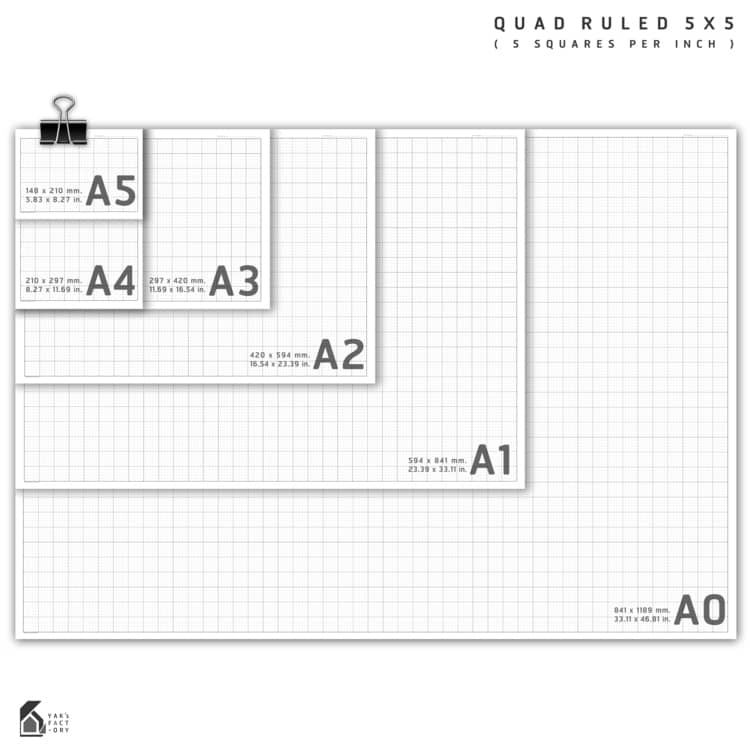
To decide grid size, consider the task and the student's handwriting. A 5×5 unit grid on letter-size paper often fits a standard projectile diagram or a small data table, while larger grids suit longer paths or more detailed annotations. Start with portrait orientation for notebooks and landscape for posters, then print a test page to confirm legibility before committing to a whole class set.
Printing details
Before printing, use the browser or printer's actual size option and disable fit-to-page. Clear margins and set a consistent scale across devices so students' graphs align when they share work. If you need multiple sheets, consider a print grid that includes a header row and a footer margin for student names.
After printing, measure a few squares with a ruler to confirm the scale is accurate. Compare printed spacing to the spec on the page and adjust if necessary. In class, I encourage students to verify margins and note any distortion caused by printer settings, so their drawings are reliable across experiments. Together, these checks reinforce careful work and help students transfer grids to real experiments.
Q1: How do I choose grid size and paper orientation for a typical physics sketch? A: Start with a 5×5 unit grid on letter-size paper and adjust if the data require more space. Q2: What about margins and labeling to keep work legible? A: Leave at least half an inch of margin and place labels toward the grid lines. Q3: Should I print in color or black and white?
A: For most classroom tasks, black and white is enough; color helps highlight axes but isn't required. Q4: How can I verify accuracy across devices? A: Print a test page, measure squares, and compare with a ruler to calibrate scale.