
Good math work begins with a clear plan and the right tools. In my classroom I rely on grid-based layouts that keep steps visible and errors accountable. A steady grid helps students connect ideas from plotting coordinates to sketching geometric proofs, making practice more deliberate and less guesswork.
As students record work in a graph paper journal, they build a habit of precision and organization. The grid lines guide where to place points, measure slopes, and plot coordinates with confidence. A dedicated journal makes it easier to compare methods across lessons and track progress over a unit, rather than scribbling results on loose scraps.
Grid size choices
Grid size matters for readability and accuracy. Common options include 1/4 inch squares for algebra and graphing, 1/2 inch grids for quick sketches, and 1 centimeter grids for geometry work. Smaller grids fit more detail on a page, but larger grids reduce clutter. If you plan to compare multiple problems at once, a modest 4 by 4 inch block can balance clarity with space.
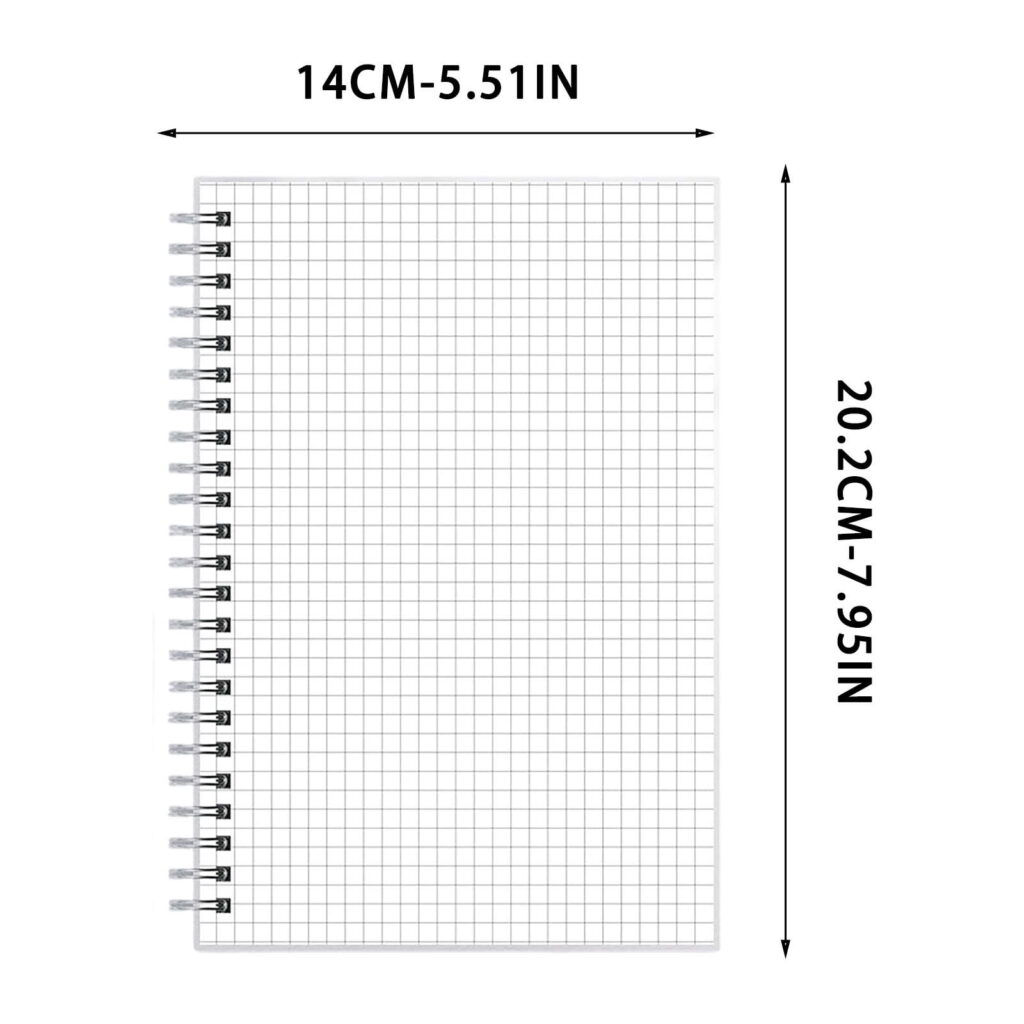
Choosing paper size and margins affects how much of your grid prints on a page. Letter or A4 works best for standard notebooks, while landscape orientation can accommodate wider plots. Keep margins generous enough to avoid clipping when printing, typically at least half an inch, and set a fixed scale so a 1-unit step remains consistent across problems.
Printing and setup
Print settings matter as much as the paper you choose. To preserve accuracy, print at actual size rather than fit to page, and disable any auto scaling in your browser or PDF viewer. In the printer dialog, select 100% or 100 scale, and choose portrait orientation unless your grid requires width. Do a quick test print on a scrap sheet.
FAQ: Q1 How do I choose grid size? A1 Start with 1/4 inch squares for most math tasks. Q2 What paper size works best? A2 Letter or A4 is fine for standard work. Q3 How can I avoid scaling issues? A3 Print at 100 percent, not Fit to Page. Q4 How are margins kept consistent? A4 or custom margins in print settings.

With the right grid size, margins, and print settings, a graph paper journal becomes a reliable teaching tool. It helps students visualize ideas, verify results, and manage time during class. Practice a quick preprint check on a scrap page and you will save frustration later while building strong habits for math work.