
As a geometry instructor, I often turn to hexagonal graph paper to illustrate symmetry, tilings, and spatial reasoning. The honeycomb grid helps students see relationships that square grids hide, from tessellations to vector paths. This article compares options and shares practical tips for choosing grid size, orientation, and printing scale.
Hexagonal grids align with many natural patterns and support straightforward distance and angle reasoning. Distances measured in hex steps are consistent, and angles commonly fall at multiples of 60 degrees, simplifying tessellations. In class, we map coordinates using axial or cube systems and translate results into real-world measurements without awkward conversions.
Why hexagonal grids?
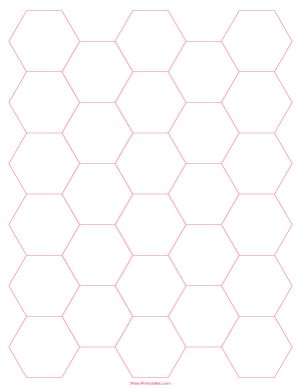
Compared with square grids, hex grids offer different advantages. They keep six-fold symmetry which helps with tilings and axial coordinate systems. In printable grid sheets, you choose hex side length or the distance between opposite sides, not the square cell. Think about how you intend to measure and scale; hex rulers may require adjusting expectations about margins and usable drawing space.
Grid size choices
Selecting the right grid size depends on your task. For detailed diagram work, a smaller hex side (around 0.5 cm to 1 cm) gives more precision. For larger tessellations, a larger grid reduces clutter and speeds sketching. Consider the scale you plan to use when labeling points; consistent spacing helps keep measurements reliable across examples.
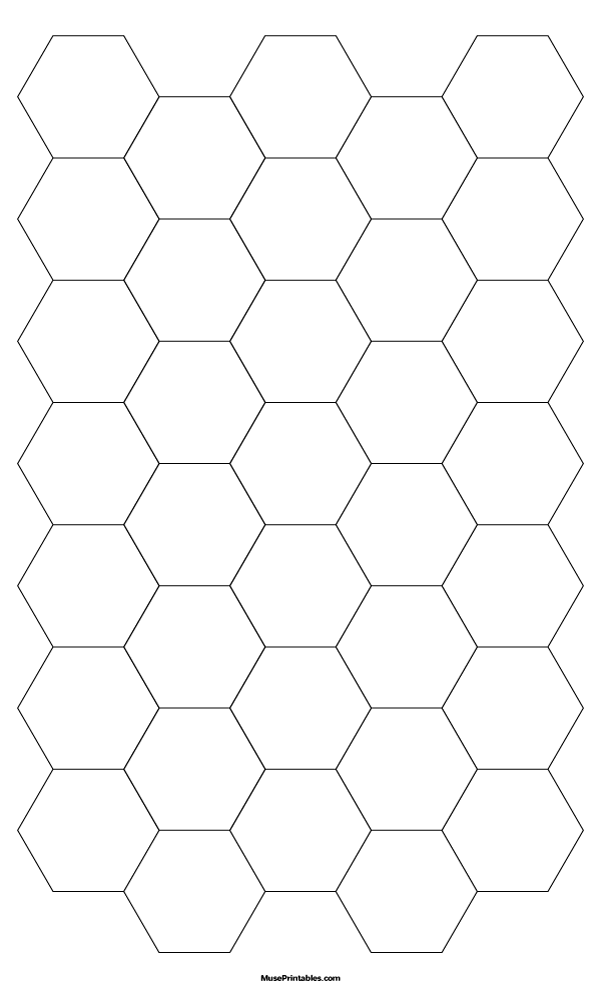
Paper size and orientation matter too. A letter or A4 page works well with hex grids, and portrait or landscape can be chosen to fit the assignment. Leave margins for notes and legends. When printing, confirm that the grid remains straight and that the hex spacing stays consistent across the page to avoid measurement errors.
FAQ: practical tips
FAQ: Is hexagonal graph paper better for tiling than square grid? A: For many tessellations, yes, because the 60-degree angles align with hex tilings. Q: Can I print at a nonstandard scale? A: Yes, but test with a ruler to confirm accuracy. Q: Do hex coordinates complicate math? A: Not if you start with axial or cube coordinates, which map neatly to measurements.
FAQ (continued): Q4: Is hex work helpful for coordinate geometry? A4: It reinforces concepts like distance, direction, and vector steps on a grid that matches the hex layout. Q5: How do I draw equal hexes by hand? A5: Use a compass and a single offset, or trace from a hex template; accuracy improves with practice.
Conclusion: Hex grids offer a practical, lower-friction way to study geometry on paper. By choosing the right grid size, paper, and print settings, you can improve accuracy and speed in diagrams, proofs, and tessellations. Keep a small checklist handy, and compare results across plain, lined, or hex grids to reinforce core ideas.